Friday, March 6, 2026

The History of the Typewriter

When presented with the options for our early technology presentations, the typewriter immediately stood out to me. The typewriter is one of the pieces of technology that still exist in the memories of our living elders. Still, it has no relevance in my generation, so I wanted to dive deeper into why it was so groundbreaking in the early days of technology. 
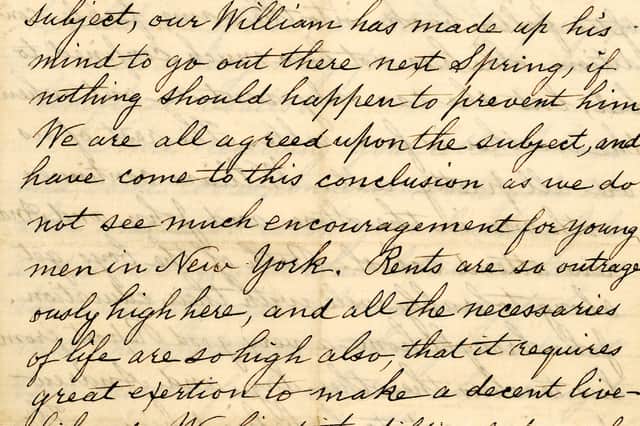
The typewriter's developmental phase was invented by John Galloway, a grocery clerk from Paisley, Scotland, in 1864. The idea behind the typewriter was to imitate that of a keyboard on a piano to become more efficient in writing letters. Galloway immigrated from Scotland to America in the early 1840’s; however, it is proven that he invented the typewriter, as evidenced by a letter sent home in 1868 to his great, great niece. The letter explained that he came up with the idea of using the piano keyboard as a model for his invention. 
A part of the letter states: “When I was young in comparison to what I now am, I took up the idea that some kind of machine could be made with keys, similar to those of a piano, to print letters, instead of writing them with a pen,” Galloway wrote home to his niece. It would surely be as easy and as speedy to operate upon keys with the fingers, as to write with a pen; the trouble of learning would be less, and the composition would be more easily read than when done up in a rugged scrawl.”
The letter written in 1868 which details Galloway's invention of an early writing machine, which he likened to a piano which printed letters.
After immigrating to America, Galloway invented a new version of his typewriter that typed in ink rather than embossing, as in his prior model. As Galloway was tweaking his creation, Sholes was patenting what we now know as the modern typewriter.
However, the typewriter idea failed to stick in Galloway's hands. The first commercially patented typewriter was by Christopher Sholes, Carlos Glidden, and Samuel Soule. The patient that Sholes had was sold to E. Remington and Sons in 1873, a company known for manufacturing sewing machines. 

half length photo of a woman seated while a typewriter sits on the table
The model, after Remington and Sons, was then known as the Remington Typewriter. This typewriter adopted an interesting layout that is still used today: the QWERTY layout. What is the QWERTY layout? This layout shows the letters Q, U, E, R, T, and Y as the first six letters in the top-left corner of the keyboard. The purpose of putting these letters in the top left corner was to prevent the mechanical arms of the keyboard from sticking together. Because this method worked well, the typewriter was adopted by corporate offices worldwide.


The impact that the typewriter had on the world was truly incredible, especially for women. Before the typewriter came out, women did not have jobs in corporate America. However, since typing was new and not a male-dominated field, it opened up opportunities for women, and that is how they entered the workforce.
Lastly, the typewriter helped with the credibility of letters. Since the type was legible, it helped avoid second-guessing the handwritten penmanship that preceded the typewriter. 

Saturday, February 7, 2026

How AI Will Affect Jobs

Kai-Fu Lee said in the Age of AI documentary that "AI is nowhere close to displacing humans from work.. I do believe that 50% of jobs will be somewhat or extremely threatened by AI in the next 15 years."
 

The major I chose when I entered High Point as a freshman was Sports Media. Specifically, I wanted to be behind the broadcasting desk. I don't believe that AI is going to replace broadcasters as a whole, because a computer can’t turn into a human, unless the creators of AI can create real-time holograms with the personality of an on-air human. 
Unfortunately after further research, I discovered that human holograms generated by AI are becoming a real thing. However, for the time being I do believe that AI has been adopted in the broadcast community as a tool for script writing and video production. 


As I have gone through my college career, my dreams for my future have taken a 180-degree change. I am still in the sports media major; however, my passion now lies in marketing instead of broadcasting. If I am being completely honest with myself, I am truly worried about the future of marketing with AI. I think about ChatGPT, a widely used AI system that can already create a marketing campaign all by itself. It is important to remember that everything it does is very surface-level, but the service can generate pictures, videos, and much more. I really do hope that marketing departments choose to keep the human spark in their programs rather than go fully AI. I believe AI can be a helpful tool, just as in broadcasting; however, if, within the next 15 years, AI advances go off the charts, I am sure companies will do everything in their power to save money and cut their marketing departments. 
As much as I worry that AI will take over my future job, I take the approach that there is not much that can be done to stop it. To combat these fears, I will do everything in my power to be as good at my profession as possible. 


Monday, January 26, 2026

Blog Post #3 Privacy Online & Off


Privacy is a word that has been thrown around in the digital world since social media has become a rising phenomenon. The question that not enough people are asking is "What is the difference between privacy and digital privacy?" Privacy is the "freedom from unauthorized intrusion," and digital privacy is "the ability of an individual to control the access and use of their personal information as and when they access the internet."    

For me, awareness of digital privacy was instilled by my mother. She would tell me that you never know the intentions of other people and you should always be aware of your surroundings.

The issues of digital privacy definitely make me more aware of what is happening in the world that I live in. As someone who does not have social media, sometimes I feel like I am living under a rock since I am not exposed to these issues that others face on a day-to-day basis. 

In the first TED Talk video posted on the Media Law & Literacy website, Joseph Geni discussed how the digital world is like a tattoo. Each time we post something, like a post or comment on a post, we are giving ourselves a digital tattoo. The way Geni approached how we treat social media gave me a completely different perspective... these things last forever!

Geni also discussed the idea of location tracking, which I believe can be used for good. However, some people have different intentions. To me, location tracking is a good thing if you are in trouble or have just gotten into a car accident and need help from a family member. Providing your location will let them know where to find you. Where things start to get scary is when people with malicious intentions hack into devices and use your location to stalk you. 

I feel as though the Government should enact more laws against breaches of digital privacy, especially in the world that we live in today. The only issue with passing new laws is that they tend to take years to become part of the United States' legislative system, which does not help the people affected by these issues.


As I said before, the only way we can protect ourselves from invasions of privacy is to be aware of what we are saying and posting online. Encryption does a very good job of protecting what is on our devices, but you can never be too careful. 


Sunday, January 18, 2026

Blog Post #2 Eight Values of Free Expression

Following our in-class discussion, I had some time to reflect on the eight values of free expression. The eight values include: the Marketplace of Ideas, Participation in Self-Government, Stable Change, Individual Self-Fulfillment, Check on Governmental Power, Promote Tolerance, Promote Innovation and Protect Dissent. All eight of these values are unique in their own way and play a role in shaping the United States as we know it today. Without these values, American citizens would not have the right to freedom of speech, check on government power, or be able to express themselves in their own unique manner. That is what makes them so special; these eight values allow each and every citizen of the United States to have their own individual beliefs and values, emphasizing the fact that no two people are the same. 
Although all of these values are important, I will be focusing on the one that resonates most with me: Individual Self-Fulfillment, which is also known as Self-Actualization, an idea formulated by C. Edwin Baker. 
The First Amendment of the U.S. Constitution states, "Congress shall make no law respecting an establishment of religion, or prohibiting the free exercise thereof; or abridging the freedom of speech, or of the press; or of the right of the people peaceably to assemble, and to petition the Government for a redress of grievances." However, Legal scholar C. Edwin Baker argued that there was a deeper, more personal meaning to the First Amendment than the surface- level definition in his book Human Liberty and Freedom of Speech.  


Baker defined Individual Self-Fulfillment as "Speech or other self-expressive conduct is protected not as a means to achieve a collective good, but because of its value to the individual" (Human Liberty and Freedom of Speech p.5)Essentially, saying that people have the right to express themselves in a way that allows them to create their own identity. 
Why is the idea of Individual Self-Fulfillment so important to me? It resonates with me the most because I believe that people shouldn't feel pressured to follow societal norms. I believe that people should be able to dress the way they want to dress, post on social media however they want to and do whatever they feel comfortable doing. 
Pursuing a degree in Sports Media is a perfect example of the topic of Individual Self-Fulfillment. As a woman, I frequently got looked down upon for choosing the direction of sports for my career, thanks to the First Amendment and C. Edwin Baker, I am able to continue going about my studies in sports without any repercussions of not following the social norm.

It is important to realize that whenever we speak, write ,or think of things, we aren't just vocalizing our thoughts, we are creating who we want to be. This topic takes me back to when we were discussing censorship in other countries and how people were being imprisoned and debanked for vocalizing their thoughts online. I personally find it wrong for other countries to do this to their citizens because it prevents them from truly expressing who they are and/or who they want to be. 

Saturday, January 10, 2026

Blog Post #1 Top Five News Sources

The definition of a news source varies from generation to generation...So what is it really? According to The International Journalism Handbook, a news source is "Any person, organization, or document that provides information to a journalist, including, but not limited to: Press releases, court filings or even a person who witnessed an event." Now, if you were to ask the older generations what a news source is, they would probably tell you "The daily newspaper, or the 5:00pm broadcast." However, since the rise of social media, news sources have become less traditional. Listed below are my top five news sources that I use and would recommend to anyone interested in diving deeper into current events.


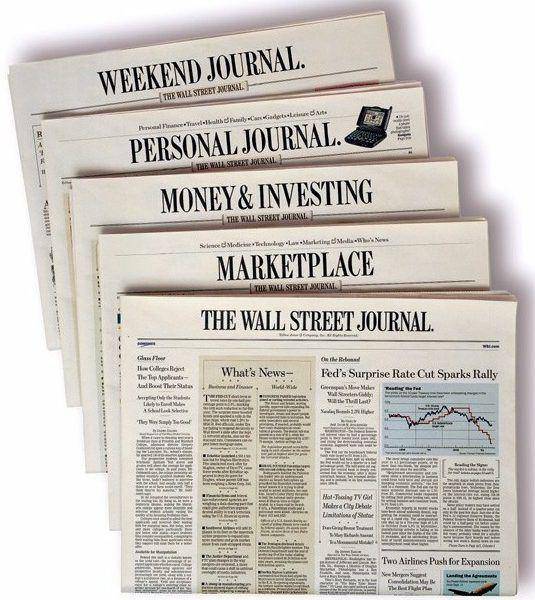
I recommend The Wall Street Journal to anyone actively seeking a job, curious about the job market, or passionate about finance and econometrics. According to the WSJ, they are "The definitive source for news and information through the lens of business, finance, economics and money." However, there is much more to the WSJ than finance and the job market." At first glance, the websites tab bar lets users choose from options revolving around tech, lifestyle, sports, etc. I believe the Wall Street Journal is a great everyday news outlet for the daily consumer.


2. TikTok 


Gen Z has turned to TikTok as a primary news source. While the app is seen as more entertainment based, traditional news outlets have started to grow a presence on the app, making the news information you are fed more legitimate. I recommend TikTok as a news source to anyone who enjoys visualizing their news in a short form video style. 


3. Google News


I highly recommend Google News for anyone that likes to have all of their information in one location. The site has articles from CNN, BBC, NYT and much more. I personally use Google News for all of my news information. 


4. Fox News


Fox News is one of the most used news outlets internationally. They are well known for their broadcast television as well as their digital articles. Fox News is a good channel to have on in the morning while you are getting ready to brush up on current events.

5. ESPN


I use ESPN for all of my sports news. As a sports media major, it is very important for me to stay up to date with current events in the sports world. ESPN makes it super easy to access any sport that you are interested in. One aspect of this source that I truly enjoy is their use of visuals and highlight reels. Dr. Smith, my communication law and ethics professor, states "The more visuals in a news source the better," proving the point that even if you are not a sports fanatic, ESPN makes their content engaging and easy to understand.